What Old Sanur Still Feels Like
There’s a Sanur that existed before the boutique hotels and the smoothie bowls and the slowly gentrifying back streets. Some of it is still there. Not preserved exactly, not performing itself for visitors, just continuing, which is a different thing entirely.
What old Sanur still feels like is harder to find than it used to be, but it hasn’t gone.
The Market in the Morning
The market on Jalan Danau Poso runs early, before the heat, before most visitors are awake. It operates for the neighbourhood, not the Instagram feed. Women with baskets moving through stalls of vegetables and dried fish and palm sugar, transactions conducted in Balinese between people who have been buying from each other for years.
You can walk through it as a visitor without disrupting anything. The market doesn’t particularly notice you. This is not unfriendliness. It’s the sign of a place that has its own reasons for being.
The Temple Rhythm
Sanur’s temples are active, not decorative. The ceremonies rotate through the Balinese 210-day calendar, which means on any given week there’s a reasonable chance a procession is happening somewhere, or an odalan has pulled a compound into several days of preparation.
You’ll sometimes hear the gamelan before you see it. You’ll round a corner and find the street gently blocked by something that has nothing to do with traffic and everything to do with obligation and devotion. The appropriate response is to slow down and let it pass at its own pace.
This happens in old Sanur. It also happens in Sanur generally, which is part of why the area has held its character better than others.
The Fishing Boats at Dawn
The traditional outrigger boats, jukung, sit on the beach in the early morning before anything has started. The fishermen who use them are often back by the time visitors arrive at the esplanade for their morning walk, the catch already gone to the market or to local kitchens.
But the boats are still there, pulled above the tideline, coloured in the particular faded way that things get when they’re used rather than displayed. Walking past them early enough you get the sense of a beach that has a working relationship with the sea rather than a decorative one.
What the Back Streets Hold
Away from the esplanade, further into the residential grid, there are lanes that are simply Balinese neighbourhood: compounds behind walls, offerings on doorsteps, children on bikes, a warung with a few plastic chairs where the same people seem to have been eating lunch since somewhere around 1987.
None of it announces itself. That’s the point.
Why It Matters Where You Stay
Old Sanur doesn’t live in the beach hotels or the properties designed to feel international. It lives in the streets around them, and you access it more easily when your accommodation is part of that fabric rather than sealed off from it.
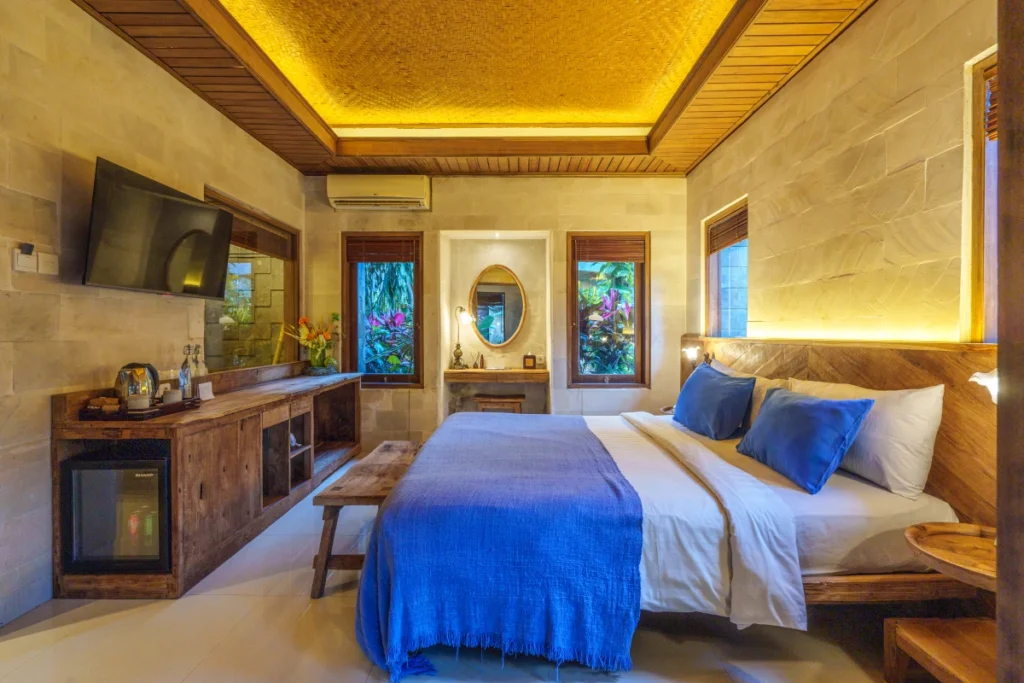
Sri Phala Resort & Villa opened in 2003, built by local guides who knew Sanur from the inside. The traditional Balinese architecture and courtyard layout sit naturally within the neighbourhood rather than above it. It isn’t trying to recreate old Sanur. It is, in its modest way, part of what old Sanur still feels like.