What a Traditional Stay in Sanur, Bali Actually Looks Like
Sanur doesn’t do spectacle. There are no infinity pools cantilevered over a clifftop, no rooftop bars with a DJ policy, no rooms designed primarily to be photographed. What it offers instead is something that takes a day or two to recognise for what it is: a version of Bali that feels like it has been here a while and isn’t trying to convince you of anything.
A traditional stay in Sanur Bali fits into that character in a way that more modern properties in the area often don’t.
What Traditional Means Here
In the context of Bali, traditional architecture isn’t a style choice. It’s a system. The layout of a Balinese compound follows principles that have governed how families build and live for centuries: the orientation toward Gunung Agung, the sacred mountain to the north; the hierarchy of spaces from most sacred to most everyday; the use of local materials, carved stone, dark timber, terracotta, that connect a building to the landscape it sits in.
Staying somewhere built with this logic feels different from staying somewhere built to look like it was. The spaces have a particular quality of proportion. The courtyards feel intentional. The greenery isn’t decorative so much as structural, part of what makes the compound breathe.
What It Does to the Days
There’s something about waking up in a space that belongs to a place rather than floating above it in glass and white render that affects the pace of the day before you’ve made any decisions.
The morning comes in a certain way. Light through a carved wooden shutter. The sound of something outside that isn’t traffic. The smell of garden and, if you step out early enough, the faint trace of incense from wherever the nearest offering has been placed.
By mid-morning you’ve probably walked somewhere. The beach, the esplanade, a warung recommended by staff rather than an app. The afternoon involves less than you planned because the environment has communicated, without words, that rest is appropriate.
This isn’t a programme. It isn’t wellness language. It’s just what happens when the place you’re staying in isn’t competing with where you are.
Why Sanur Is the Right Setting
The traditional stay in Sanur Bali works partly because Sanur itself hasn’t been entirely reshaped by the tourism economy the way other parts of the island have. The morning market still operates for local households. The temple ceremonies happen on the Balinese calendar rather than the visitor schedule. The esplanade is used by people who live here as much as by people passing through.
A traditional property in this kind of neighbourhood becomes continuous with its surroundings rather than contrasting with them. The logic of the architecture and the logic of the street are pulling in the same direction.
Sri Phala Resort & Villa
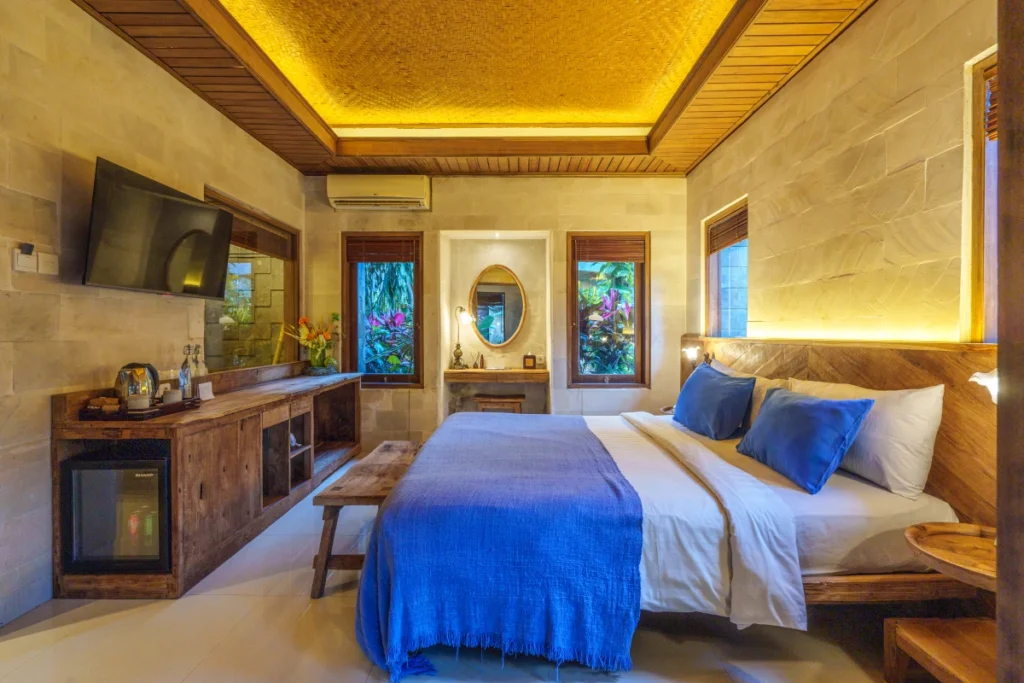
Sri Phala Resort & Villa was built in traditional Balinese style, with a courtyard layout, stone carvings, tropical gardens, and low-rise buildings that have been here long enough to feel settled rather than staged. The service is personal in the way that smaller properties tend to be. It doesn’t try to be more than it is.
For travelers who want a traditional stay in Sanur Bali that actually earns the word, Sri Phala Resort & Villa is worth considering as a place to base the trip from.